
 Trouble In Mind: Bob Dylan’s Gospel Period – What Really Happened by Clinton Heylin, 2017
Baby Boomers will find this excruciatingly funny but the first Bob Dylan song I ever heard on the radio was When You Gonna Wake Up. It was the fall of 1979 and I had just started Grade 8. Despite what appears, in retrospect, to be an enormously creative run of three wonderful records – Blood on the Tracks, Desire, and the wildly underrated Street Legal – Bob Dylan wasn’t someone much discussed among junior high students at the time. I spent most of my days at school talking about music but the topics were rock vs disco, whether or not punk was cool, and what to make of the keyboard sounds on In Through The Out Door.
But I liked When You Gonna Wake Up. I heard it on my clock radio in the morning and the chorus was in my head all day. I had no idea what the song was about but it stuck with me. Yeah, when are you going to wake up?
The point in a musician’s history when a fan first discovers their work is crucial. I picked up on Neil Young when he released Rust Never Sleeps. Great album. I discovered The Rolling Stones about the time that Some Girls appeared. Pretty good record. But when Bob Dylan appeared on my teenage horizon line, he had just converted to a particularly strident form of evangelical Christianity. When I saw him a couple years later in 1981, the rumour was that he wasn’t playing any of his old songs. He did, as it turned out, but they were all but unrecognisable. I remember a big hippie dude passing me a joint and shaking his head. ‘This is just shit,’ he said, as Bob mauled one of his classic songs on the stage of Maple Leaf Gardens.
It was thus with great interest that I read Clinton Heylin’s new book, Trouble In Mind: Bob Dylan’s Gospel Period – What Really Happened. Yes, it’s the most garbled title of the year – but within its covers is a detailed chronology of the most surprising transformation in all of those in Dylan’s long career. He had been an earnest folksinger, a speedy folk rocker, a sort of Thoreau style woodland bard, a Countrypolitan gent, a complete mess, a stadium rocker, a raggle taggle gypsy and whatever the hell that was on Live at Budokan. Somehow the end of his second decade in the music business led him to the Vineyard Christian Fellowship, an evangelical organisation that still has centres all over the world. The story is that someone threw a silver cross on stage during the 78 tour and he pocketed it. A few days later he took it out and had a profound spiritual experience.
I’ll start with a mild criticism of Heylin’s book before I get to its many virtues. Heylin is not a Christian and does not seem to have much knowledge of the faith and its history. He is out of his depth. Unfortunately, I am too. I would have liked far more detail on Bob’s conversion and the particular brand of born again Christianity he embraced. I gathered it was vaguely in the ‘end is near’ category but I found myself doing some heavy googling for further clarification. I would have also been interested in how it all ended. Did he break with the Vineyard people? Heylin barely mentions the Infidels album. The title alone was surely worth some discussion, not to mention the sudden disappearance of overt Christianity in his lyrics. If you are in search of a book that probes the spiritual content of his conversion, this isn’t it.

Heylin, however, makes up for his lack of theology with a real passion for this music. The book is by far the most measured and thoughtful consideration of the material Dylan recorded and performed in his Christian period. The political implications of evangelical Christianity in the US and Dylan’s centrality in the counter culture have perhaps skewed the critical reaction to the three albums he released between 1979 and 1981. Heylin tells their stories and listens to them with fresh ears.
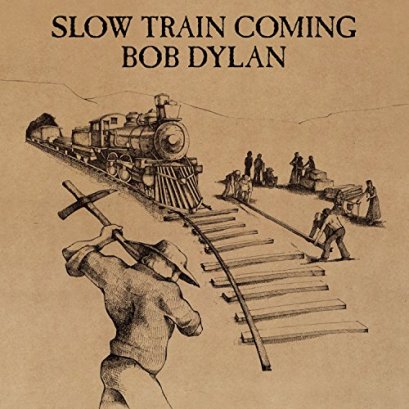 The first, Slow Train Coming, is surely one of Bob Dylan’s finest moments. After a dry spell in the early 70s, Bob began to write from a more personal place. His ability with imagery remained but he left behind the Beat babble for lyrics that seemed to come from a deeper source. The older I get, the more difficult I find it to listen to the raw pain on 1975’s Blood on the Tracks. Street Legal (1978) is, for me, on par with Neil Young’s Time Fades Away. It sounds like a ragged cry of bewilderment. Slow Train thus sounds like an answer, of sorts. The songs are beautifully constructed and feature little of the obfuscation that Dylan was so well known for at the time.
 It took me years to finally sit down and listen to the second album in the series, Saved. The original cover art was confronting and the stridency of the Christian messages stung critics who felt as though they’d allowed him a free pass on one religious record already. The negative reviews in retrospect seem to be all about discomfort with the lyrics and the context of the album, rather than the music. I wonder how many people, like me, went running home to listen to it after hearing John Doe’s version of Pressing On in Todd Haynes’ film, I’m Not There. I suspect many found a far better album than they expected. I sure did!
Shot of Love, the final record in the triptych, remains a classic example of Dylan’s occasional, or not so occasional, self sabotage. There is a long list of great songs that Dylan has left off albums. Imagine not finding a place for Mama, You’ve Been On My Mind in the mid sixties! The original vinyl release of Shot of Love did not include Groom’s Still Waiting At the Altar though it has been restored on subsequent releases. Caribbean Wind didn’t appear on any record until the first bootleg series albums were released in the 90s. Luckily, he did manage to include Every Grain of Sand but, as has been the case before and since, there was a much better album available that he chose not to release. It’s maddening but that’s Dylan, I guess. Daniel Lanois smashed a dobro on the floor of the studio while they were recording Oh Mercy together. I wonder if that happened when Dylan told him that he didn’t want to include Series of Dreams.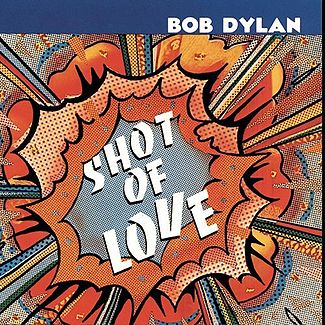
Clinton Heylin is something of a rock star himself in the field of music journalism. His exhaustive two volume Songs of Bob Dylan belongs on your shelf next to Revolution in the Head. He has written books on Van Morrison, The Velvet Underground, mental illness in rock and roll, Bruce Springsteen, punk, and one of the definitive biographies of Bob, Behind The Shades. His first book was an edited collection of Dylan’s sermons on the Slow Train tour. He is clearly fascinated by Bob and, in particular, the Christian period.
It’s fair to say that this is a book for hardcore Dylan fans. It’s a little hard to imagine the general reader finding Heylin’s concert by concert, studio session by studio session account terribly engaging. I am a reasonably big fan and I found myself drifting at times as he detailed the subtle differences in the performances of particular songs from night to night. That said, at least he avoids the sort of lazy generalisations writers usually throw at Dylan’s conversion and the music that resulted. Heylin simply lays out the evidence and allows the reader to draw their own conclusions.
Here are some of mine:
Bob Dylan deserved the Nobel and perhaps some kind of military award for courage. It was one thing to go electric in 1965. The folk boom was over and he was hanging out with Alan Price. Folk rock was cool and Dylan was cool when earnest folk singers were starting to look a bit square. But in 1979, becoming a born again Christian was not cool. The Jesus freaks, the folk mass, and the Quaker pacifist street cred of the sixties and early 70s had given way, in popular culture, to conservative TV evangelists like Oral Roberts and the cretinous Anita Bryant. Musically, 1979 was the year of the Talking Heads, The Police, Elvis Costello, Throbbing Gristle, and many others who represented a changing of the guard, as Bob might say. His near contemporaries Pink Floyd released The Wall that year and seemed to capture something of the zeitgeist of the coming of Thatcher and Reagan. It was morning in America all right, just not a very nice one. If Bob Dylan was Jackson Browne or Bruce Cockburn, he might have found new purpose in protesting against nuclear power or Reagan’s criminal behavior in Central America but, of course, Bob Dylan is predictably unpredictable. While his contemporaries came to terms with their pasts and presents with varying degrees of success, Bob launched a tour where he played no old songs whatsoever and interspersed the new material with lengthy sermons about the coming apocalypse.
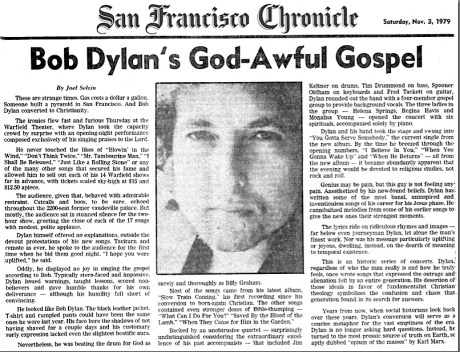
The audiences were not particularly receptive. ‘Jesus loves your old songs too’ was a common banner seen at the shows but that was a jovial sort of response. Generally audiences booed, interrupted the singer with cries of ‘Lay Lady Lay, Bob!’ before walking out. Concerts were canceled due to poor ticket sales and he was lashed by the critics who resented what they saw as a complete betrayal of their own salad days in the sixties.
This was a shame because, as Heylin points out, Bob was performing perhaps the best shows of his career. His commitment to the material was 110%. The band was tight and there was none of the sloppiness or indifference so characteristic of the mercurial singer in his live performances. There are clips galore on YouTube and the latest edition of the Bootleg Series is a remarkable document of a performer who was clearly emptying the tank every night.
My admiration for Bob grew as I followed him through this period in Heylin’s book. He is fearless and his integrity is beyond question. I seriously doubt that any other rock and roll musician, particularly of his generation, would have had the balls to do what he did in the early 80s. Bob’s output since then has been, to say the least, uneven. I think that, like the 1966 tour, the gospel shows burned him out. In fact, I would go so far as to say that he never really recovered. There have been many highlights since then and albums like Time Out of Mind and Tempest are among his best. But Slow Train Coming, Saved, and to a lesser extent Shot of Love, may represent some of his final unguarded moments. He is famous for his masks but they were all down on these records. He had experienced something profound and was mocked and reviled for sharing it with his fans. Who would blame him if he shut up shop? If you are one of the many Dylan fans who have always found the Christian period off putting, this book will almost certainly change your mind. But beware, like Bob, you might get some very mixed reactions when you put on Saved at your next dinner party!

Teasers: John Lennon’s answer song to Gotta Serve Somebody. The ex Beatle was astounded that Bob Dylan had become a Christian and detailed his objections to religion in a song called Serve Yourself that almost ended up on Double Fantasy. What he doesn’t mention in the song is that he and Yoko, at the time, were spending hundreds of thousands of dollars on astrological charts, of all things. Yep, that Christianity stuff sure is irrational…
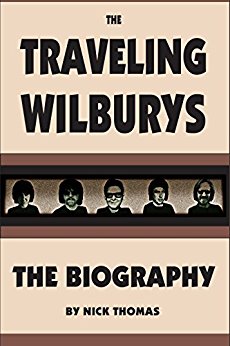 The Traveling Wilburys: The Biography by Nick Thomas, Guardian Express Media (E-Book) 2017
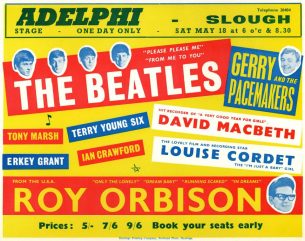 About 8 months later, a 13 year old boy called Tom Petty in Gainesville Florida was watching The Beatles on The Ed Sullivan Show, completely unaware that he would one day form a band with the shy fellow playing a Gretsch Country Gentleman. Four or five months after that, in the summer of 1964, George and his band mates were supposedly introduced to marijuana (Rock and Roll myth #540: They didn’t come across weed in Hamburg? Yeah right!) by a chatty fellow from Minnesota named Bob Dylan. As they puffed away in the Delmonico Hotel, Bob probably didn’t foresee the day when he would accept an invitation to join George Harrison’s band.
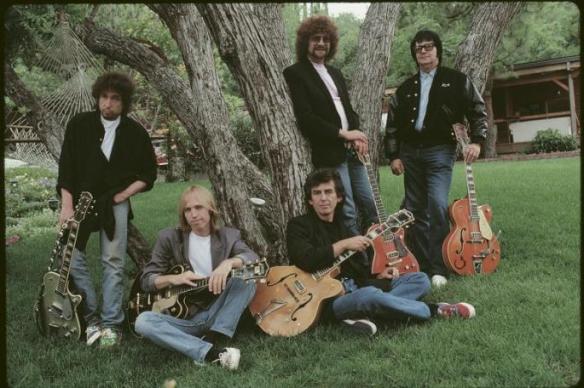

 Thomas’s book makes no special claims for the songs on the album. They were written quickly by a group of very experienced songwriters throwing out lines to each other. Lyrically speaking, nothing on either record is a patch on any of the members’ own work, your feelings about ELO notwithstanding. But this record is all about atmosphere and sound. George Harrison’s lovely guitar work; Roy’s otherworldly voice; Dylan’s strangeness; and Petty’s punk rock sneer all combine here for something very special. Jeff Lynne adds his acoustic wall of sound and old school rockabilly sensibility for the icing on an estimable cake.
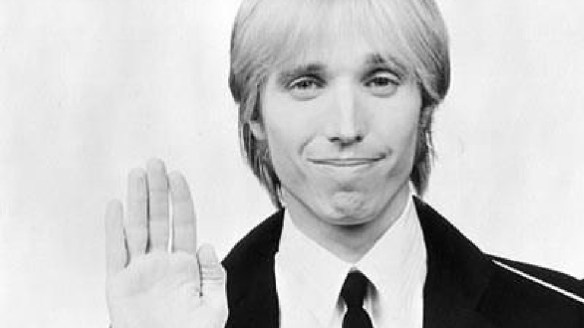 For Tom Petty, October 20, 1950 – October 2, 2017
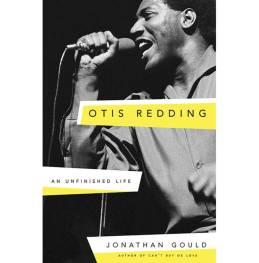 Otis Redding: An Unfinished Life by Jonathan Gould, Crown 2017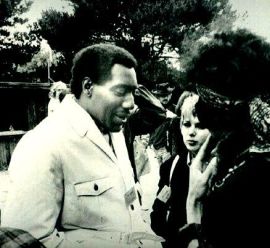
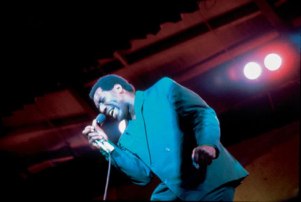 Gould weaves Redding’s story into the broader narrative of African American life in the mid 20th century. His generation of singers, including his occasional rival James Brown, followed the examples of Ray Charles and Sam Cooke who had both worked hard to maintain control over their careers. The young Otis had to prove himself several times in new neighborhoods when the family moved for work in the 1950s. The man that emerges in this book is no pushover and this is not the story of how a black entertainer was ripped off by unscrupulous white men. From the beginning, Otis chose the people around him carefully and, for the most part, avoided the usual pitfalls musicians encounter when their music begins to make money.
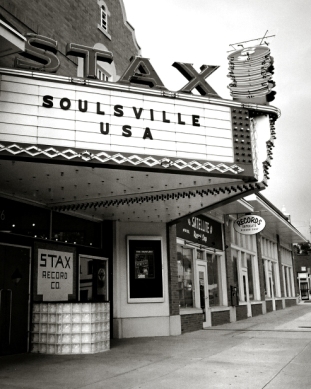 If you’ve already read the standard Stax Records books (see my list below), most of which cover Otis at great length, there are still many good reasons to read A Life Unfinished. The research is impeccable and perhaps it is time for a serious biography that goes beyond the music and addresses the wider implications of Otis Redding’s time on earth. Gould works hard to penetrate the somewhat mysterious inner life of the man. This is by no means some kind of iconoclastic Albert Goldman style biography but we are certainly left with a sense that there was a lot more to Otis than the genial image projected by his music.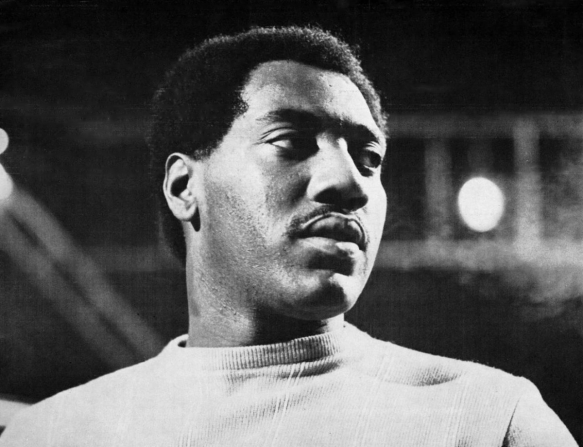
 Pickers and Poets: The Ruthlessly Poetic Singer-Songwriters of Texas by
  I was sold when Willis Alan Ramsay turned up in one of the first essays. In the chapters that follow, it becomes clear that many songwriters continue to hold him in very high esteem. He recorded exactly one album in 1972. It sold poorly and disappeared almost immediately. But what a record! You’ll recognise one song on it. Yes, Willis Alan Ramsay wrote Muskrat Love and, what’s more, it’s a great song. His version, that is. He also wrote Angel Eyes, a song that you will either play or wish you had played at your wedding.
 The introduction includes a cringe-worthy explanation of why so few women are included but the chapter devoted exclusively to them is perhaps the best in the book. There are also chapters on newish singer songwriters like Kacey Musgraves and Terri Hendrix in the last section of the book. The whole thing, at times, seems edited by committee so perhaps they forgot. The chapter on Don Henley (yes, from Texas, shame about his anaemic music) was mercifully brief but still too long for this reader. The sections on figures like Steve Earle and Lucinda Williams contained far too much general information that is already widely available. The chapter on Rodney Crowell, on the other hand, was fascinating. Guy Clark seemed underplayed throughout the book though the essay by Tamara Saviano bodes well for her recent biography of the man. But these are just quibbles about an engaging and informative book. Any book on music that I have to put down so that I can listen to an artist or album that I don’t know gets high marks from me. It took me weeks to get through this one! Discovering David Rodriguez alone was worth the cover price.
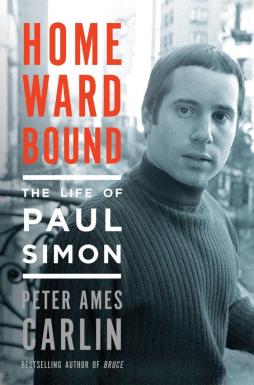 Homeward Bound: The Life of Paul Simon by Peter Ames Carlin, Henry Holt, 2016
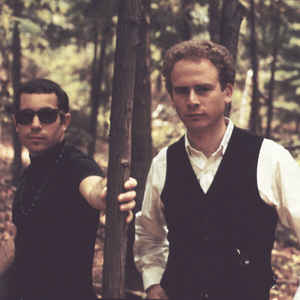 It didn’t last long. Around 1970, Art’s involvement in the Catch 22 film proved too much for Simon’s fragile ego. He went solo, sank into depression when his first album only sold 2 million copies, and finally phoned up Artie to appear with him on the second ever episode of Saturday Night Live. “So, you came crawling back?” he said. The reunion lasted for one glorious song, My Little Town.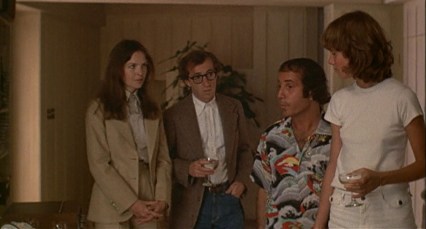
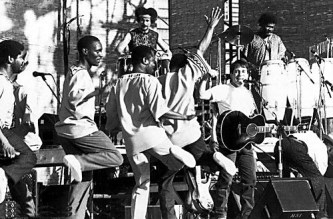 And that brings us to Graceland. This is where the book really takes flight. What a story! Graceland was an album that I loathed with an almost exquisite fervour when it appeared in 1986. It sounded like BMW coke music, the kind of thing Gordon Gecko would have in his car. Man, the 80s were awful. Don’t let anyone tell you differently, kids. Simon predictably ran into trouble when he went to South Africa and recorded with a group of mbaqanga musicians that he first heard on a cassette that he forgot to give back to Heidi Berg. Before he even got around to his usual shenanigans with writing credits, he was in trouble with the ANC and found himself on a UN blacklist of musicians who had broken the embargo against working in South Africa.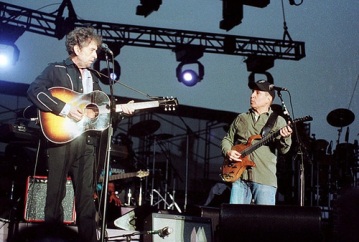

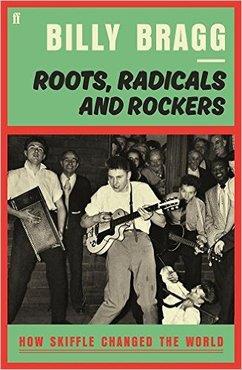 Roots, Radicals and Rockers: How Skiffle Changed the World by Billy Bragg, Faber & Faber, 2017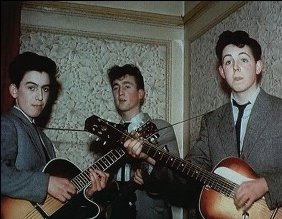
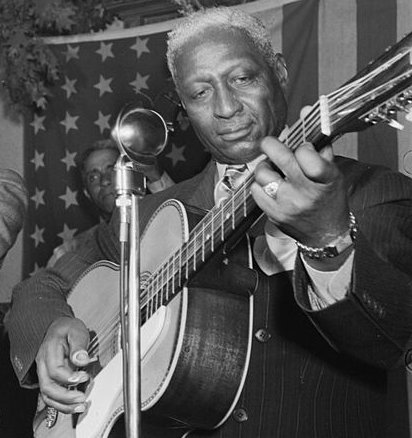
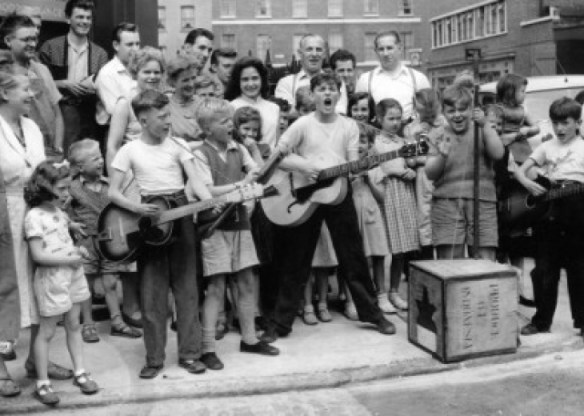
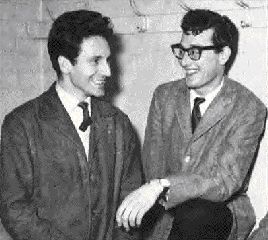
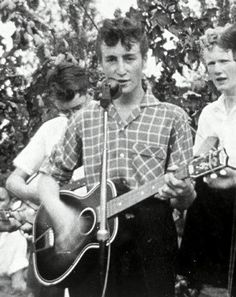 If you’ve never listened to skiffle, Billy presents the genre in great detail, picking out the notable from the forgettable. Ever wondered about the song ‘Maggie Mae’ on The Beatles Let It Be album? The original was the biggest hit of a Liverpool outfit called The Vipers. One of the issues for skiffle bands in the studio was the tendency for older producers to top up their sound with strings and other embellishments. The Vipers, fortunately, found a young producer who correctly noted that their rawness was part of their appeal. He simply recorded them, live on the floor. That young producer would use a similar strategy with another band from Liverpool a couple of years later. His name was George Martin.
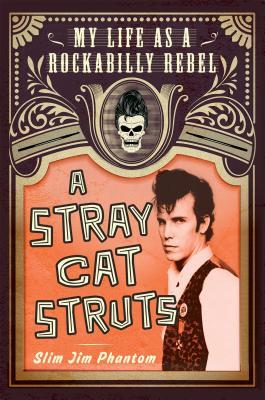 A Stray Cat Struts: My Life as a Rockabilly Rebel by Slim Jim Phantom, Thomas Dunne, 2016
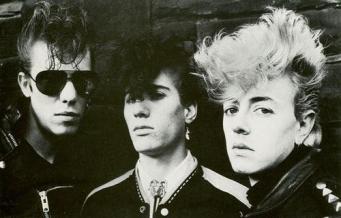 Which brings me to The Stray Cats, a band featuring vocalist and twangmaster Brian Setzer and ably rhythm sectioned by his Long Island high school chums Lee Rocker and our author, Slim Jim Phantom.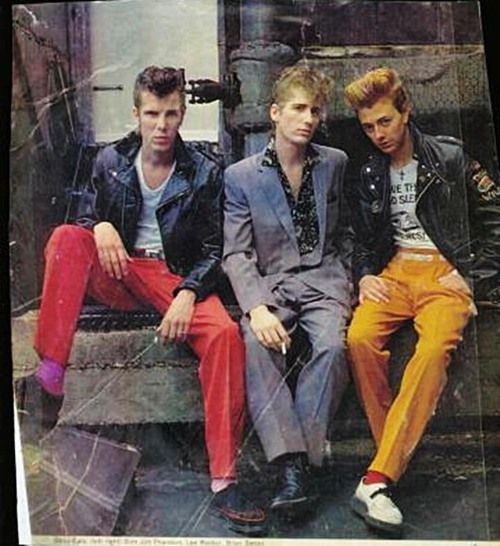

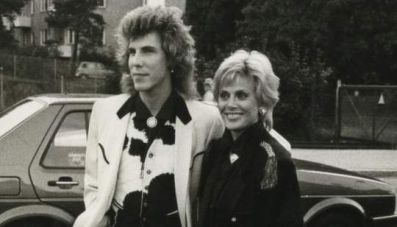
 What does one say about a memoir like this one? It’s a bit of mess in terms of chronology and anyone looking for a detailed account of The Stray Cats’ career will want to look elsewhere. In fact, there’s not much about The Stray Cats at all. I would have been very curious to hear about the recording of those early albums and what it was like to work with Dave Edmunds. Perhaps Brian Setzer will cover that if he ever writes a book. There is a bit about their sound but never enough to really satisfy. Just when you think he is about to double down on the band that made him famous, he’s back in a club with Michael J Fox or someone.
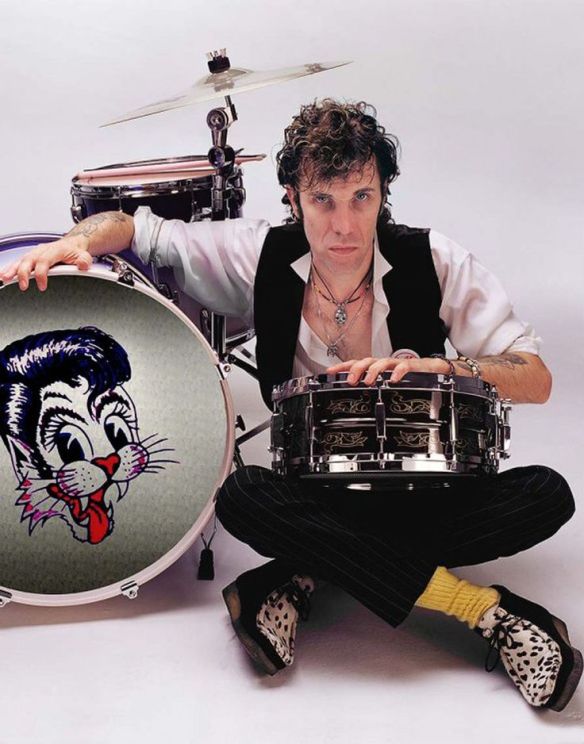 Teasers: Slim Jim’s Rules of Rock and Roll are a highlight. Number Four is: “Always wear something around your waist that has nothing to do with holding your pants up.” Noted!
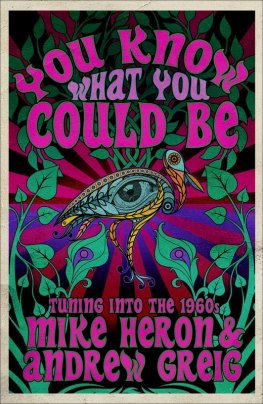 You Know What You Could Be: Tuning Into the 60s by Mike Heron and Andrew Greig, riverrun 2017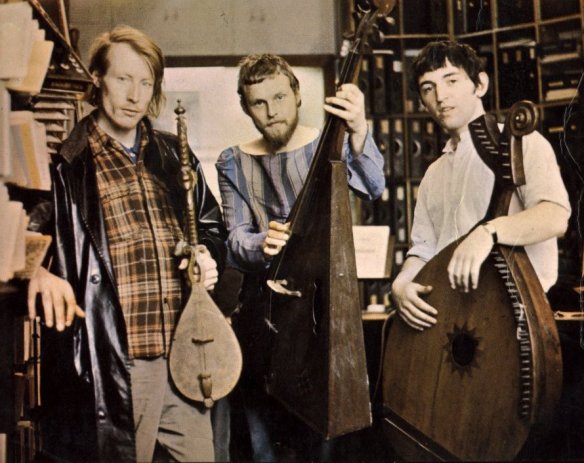
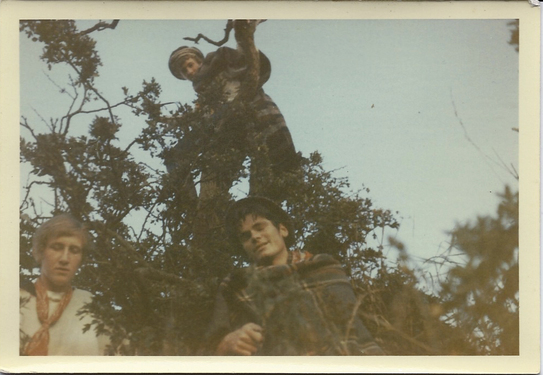
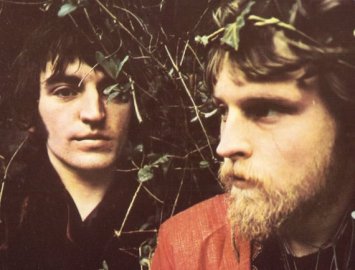 There are a number of books on The Incredible String Band that will provide a chronological account of their musical journey. Rob Young’s take on their career in Electric Eden is particularly good. But You Know What You Could Be is something different. Surely a band’s story must include their audience to some extent. Without going all ‘trees falling in the forest’ here, the effect of the music is often as significant as the music itself. Most rock and roll biographies will trace the influence of their subject on subsequent acts but what about the ordinary fans whose lives are changed, sometimes dramatically, by the music? Clearly, no one wants to read a whole book of Led Zeppelin fans cooing about Knebworth or, worse, a Deadhead memoir (there are many, if you do!) but I like what Greig has done in this book.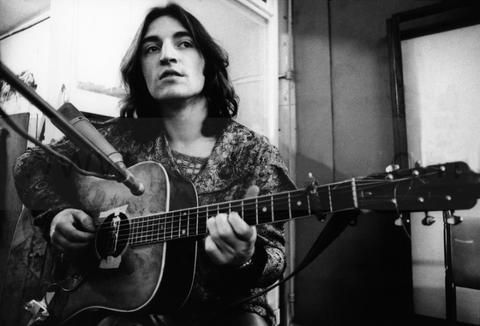
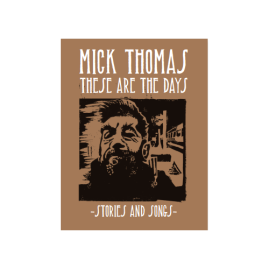 These Are The Days: Stories and Songs by Mick Thomas, Melbourne Books, 2017
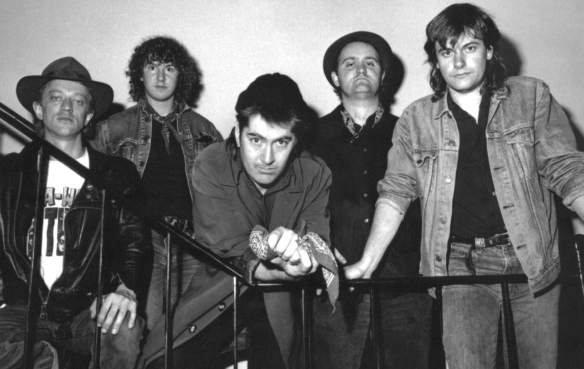
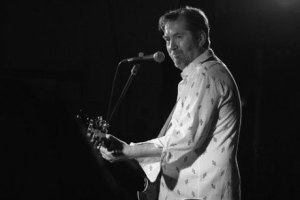 I was particularly struck by the chapter on Sisters of Mercy. This song from Weddings Parties Anything’s Roaring Days album was written in response to a nurses’ strike in the 1980s. In 2012 he was invited to play it for a large group of nurses at a strike meeting in the Melbourne Convention Centre. This chapter might have been a straightforward story about the song and how things never change. But it wasn’t. Instead, Thomas talks about a critique he’d copped in another setting for overdoing the emotional dimension of a song about asbestos poisoning. He was accused of emphasising the victimhood of the sufferers instead of celebrating their fighting spirit. The charge seemed terribly unfair and few singers would have the courage to revisit such a hardline dressing down. Mick then finds himself playing Sisters of Mercy for the striking nurses and choking back tears so as to avoid a repeat of the asbestos song episode. He manages it but only just. My own eyes grew a bit misty reading this chapter. The idea of a singer at a strike meeting in these cynical times is itself moving!
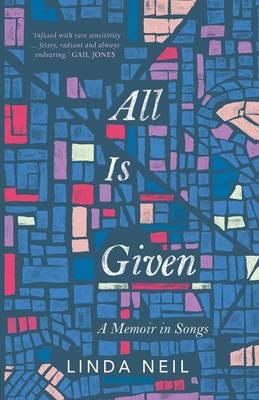 All is Given: A Memoir in Songs by Linda Neil, University of Queensland Press, 2016
 On Books On Music