
 All in the Downs by Shirley Collins, Strange Attractor Press, 2018
Jazz ruined her first marriage. Her husband loved it; she didn’t. He played it so much that one night she lost her temper and threw a tea cup against the wall. His love for jazz extended to inviting young jazz musicians to stay with them at their house. Some of these people had drug habits and one day a couple of East End heavies came to the door. Someone owed them money. Shirley Collins wrote them a cheque. Then she wrote a note to her husband. No more jazz; no more jazz musicians. Goodbye.
This was in 1970, by which time Shirley Collins was a famous folk musician in England. She was still mistaken for Judy Collins occasionally by confused interviewers but she had been recording since the 50s and, along with her sister Dolly, made a number of fascinating and well received records. Ten years later, her career was winding down and she had begun a series of jobs as an administrative assistant in various government offices. From the early eighties until she retired in 1995 she worked in offices, typing and filing. In the early 90s, a young co-worker crankily observed that he was stuck working with a bunch of old ladies who had never done anything but work for the government. Shirley said this wasn’t the case. She had been on television, played the Royal Albert Hall and the Sydney Opera House. He apologized. And so he should have!

Why was one of the great figures of the English folk revival typing up council meeting minutes in the 1980s? I imagine Kate Bush coming on the transistor radio in the lunchroom and Shirley looking around to see if anyone noticed how indebted the younger singer was to her. But, sadly, by this stage, Shirley couldn’t sing. She suffered from a condition called dysphonia, otherwise known as ‘marrying someone from Fairport Convention’ syndrome. It started when her second marriage, to former Fairport bassist Ashley Hutchings, disintegrated in the late 70s. The other famous folk sufferer was, yes, Linda Thompson. It’s no joke, of course. The condition, which is still not fully understood, shut down the careers of both these talented performers.

With Ashley Hutchings in the early 70s
She did make an amazing comeback in 2016 at age 81 with the album ‘Lodestar’. Listen to it and then stop moaning about getting old. This is her ‘Blackstar’. All of those fallow years did nothing to dampen her originality and exquisite taste in ancient English songs. Her voice has deepened slightly but, as with her best work of the 60s and 70s, there is a timeless quality to her delivery. There’s no real comparison with any of her near contemporaries. She’s nothing like Sandy Denny or Maddy Pryor or Linda Thompson or anyone else in the folk rock box. On the other hand, she’s not like Peggy Seeger either. I always think of John Clare when I listen to her music. Her England is rural and wild but threatened by enclosure. There are Romany families on the road and a few old Luddites here and there.
The interesting thing about Shirley Collins is that she was always immersed in English folk music without ever succumbing to the almost Stalinist orthodoxy of people like Ewan MacColl. He doesn’t come off very well in the book. An account of a disturbing ‘#Me Too’ moment with him is followed by a hilarious description of him sitting astride a chair at a folk club with eyes closed and a hand to one ear, presumably making sure that the singer on the floor wasn’t performing a song written more than 20 kilometers from where the singer was born. Such were the strict parameters of the English folk politburo of the early 60s. You can imagine what MacColl thought of Donovan!
Collins performed traditional material but was always open to innovation. MacColl’s puritanical approach has always struck me as slightly pathological. He wanted to collect, control, and dominate. Shirley Collins simply loved the music. She also realized that it could be preserved without putting it on a shelf in a jar. Her famous 1964 collaboration with Davey Graham, ‘Folk Roots, New Routes’, is a good place to start. Graham, who wrote the instrumental Angi and was a great influence on Jimmy Page, was the definition of far out in the early sixties. He was ostensibly a folk musician but was incorporating outlandish open tunings (he more or less ‘invented’ DADGAD, for instance) and Moroccan rhythms into his sound. Together they recorded English folk songs and, according to many critics, created a key album in the English folk rock story. Some, like Rob Young, the author of Electric Eden, suggest that it is actually the starting point for the genre.
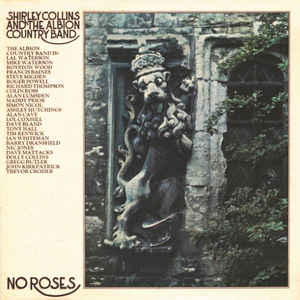 But let’s talk about ‘No Roses’, the greatest album Fairport Convention never made. Except that they sort of did. Most of the ‘Liege and Lief’ era members (only Sandy and Swarbs don’t appear) turn up somewhere on this 1971 album. I’m not going to suggest that it is the equal of that record but if you love ‘Liege and Lief’ and are frustrated by all of the Fairport albums that followed, I might be your new best pal for suggesting this one, if you’ve never heard it. Richard Thompson, Simon Nicol, Ashley Hutchings (it was his group, the Albion Country Band backing her), and Dave Mattacks all appear on the record, along with members of the Young Tradition, Maddy Pryor, sister Dolly, Lal and Mike Waterson, and the awesome Nic Jones. I found out about this record reading Electric Eden and it has become a great favourite.

Shirley and Dolly 1940
Collins devotes space to both of these records, of course, and to her life among the stars of English folk rock. But the book is far more than a litany of meetings with remarkable guitar players – she did have tea with Jimi Hendrix – or a bitter rant about the music business – something that would be entirely justified in her case. She was born in 1935 and regards her childhood memories of Sussex as the beginning point of her love for English folk culture. I found myself sinking happily into a pre digital world that wasn’t all that different from John Clare’s, in some ways. She weaves a number of folk songs into the narrative. All of them are of interest and there is nothing pedantic in her descriptions. Her knowledge of the tradition is wide. There was a time when men and women roamed England collecting songs from anyone they could find. This was the raw material for the folk revival. Collins describes this process and gives credit to those involved. I was particularly impressed by her admiration for the Romany singers whose contribution is sometimes forgotten and whose descendants remain subject to terrible discrimination.
Where singers like Sandy Denny, Vashti Bunyan and, to a lesser extent, Anne Briggs have become cult figures, Shirley Collins is, to my mind, still wildly under appreciated. She was awarded an MBE and declared a national treasure by Billy Bragg but I feel like she isn’t accorded her rightful street cred. Listen to ‘Anthems in Eden’, a 1969 album with Dolly. You think you’ve heard Freak Folk? This really is folk music and it is freaky stuff, by any measure. You can read all about how it was made in her book. All in the Downs is an endearing and thoughtful memoir for fans and novices alike.

Teasers: Sometimes your heroes are jerks in real life. Shirley isn’t vindictive but there are some devastating portraits in this book. If you’re a fan of Ashley Hutchings…
From Lodestar:
There’s not a lot of old footage of Shirley available but this is from a 1970s BBC documentary:
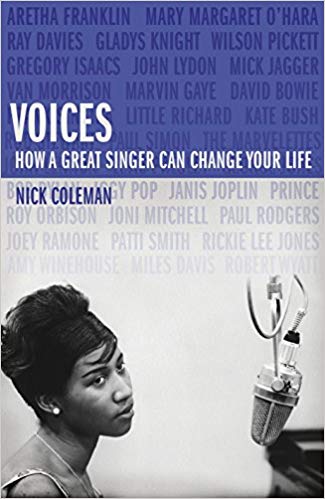 Voices: How a Singer Can Change Your Life by Nick Coleman, Jonathan Cape 2018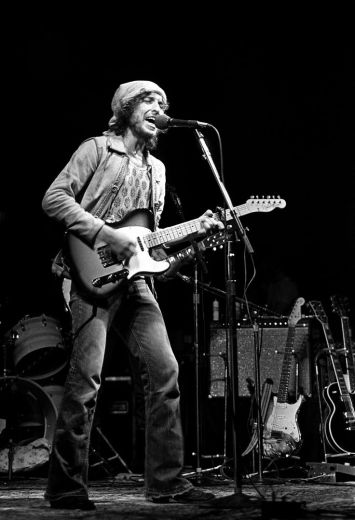


 Memphis ’68: The Tragedy of Southern Soul by Stuart Cosgrove, Polygon, 2017

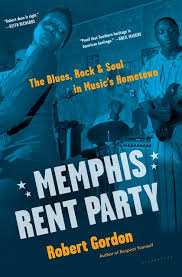 Memphis Rent Party: The Blues, Rock & Soul in Music’s Hometown by Robert Gordon
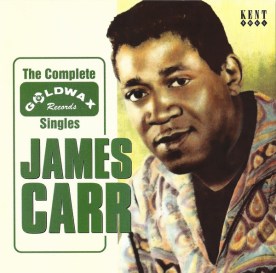 But most of the pieces here deal with Memphis musicians. James Carr, a soul great that has never had anywhere near the recognition he deserves, is profiled. His story is another sad one. He recorded the original, and by far the best, version of Dan Penn’s Dark End of the Street on Goldwax Records in 1967. It should have set him up for a lifetime’s career in music. Instead, he battled terrible mental health problems and substance abuse issues until his death in 2001. Gordon’s interview presents him with the almost Lear-like pathos of a delicate soul unraveling. This is something of a pattern in these essays. The brilliant Jazz pianist Phineas Newborn Jr suffered numerous nervous breakdowns after his initial success in the late 50s and even had his fingers broken in a bar one night. Gordon interviews his mother here and profiles his brother Calvin. Jerry McGill, a Sun Records recording artist and the subject of one of Gordon’s films, is another hard luck story albeit one with a mildly happy ending.
 Astral Weeks: A Secret History of 1968 by Ryan Walsh, Penguin 2018

 Walsh points out that Boston already had some form in the occult game. The city had been a hotbed of spooky fun during the great age of American spiritualism in the late 19th Century. The Fox Sisters opened a branch of their New York operation there in the 1870s. According to Walsh, one of their first customers was former first lady, Mary Todd Lincoln. She had already visited pioneering ‘spirit photographer’, William Mumler over on Washington Street for a photo of her with Abe’s ghost. The Boston Planchette, a prototype of the Ouija board, appeared in the 1860s. Walsh makes an interesting, if somewhat tenuous, connection between the spiritualist Edgar Cayce and the rise of the progressive ‘free form’ FM format on the legendary WCBN. Radios appear throughout Van’s lyrics and they often have a slightly mystical resonance. Watch the clip of Caravan from The Last Waltz where he begins to riff on the idea of The Band as a radio. Walsh doesn’t suggest there is a direct link – there is a significant and much earlier radio in 1967’s TB Sheets – but late night FM was an important part of Van’s life in Boston and radio seems to have been imbued with a certain spiritualist quality in that city.
 Walsh builds his book around a search. He’d heard that Peter Wolf (of the J. Geils Band) had a reel-to-reel tape of a performance by Van Morrison from the summer of 1968. The show was at a venue called The Catacombs and it featured Van on acoustic guitar backed by his bass player, Tom Keilbania, and John Payne who later played flute on Astral Weeks. The rumour is that the tape contained early performances of the songs on that album along with things like Moondance and Domino. The story has always been that Berliner and Davies were more or less improvising in the recording sessions for Astral Weeks. Keilbania has maintained that the ideas on the record were developed during the summer of 68 in the gigs they played in Boston. Critics are always banging on about rosetta stones in rock and roll but this would be the real deal. So what happens? Does Walsh find the recording? You’ll have to read for yourself. No spoilers here but don’t bother hitting up your favourite source of bootlegs. It aint there. Yet…
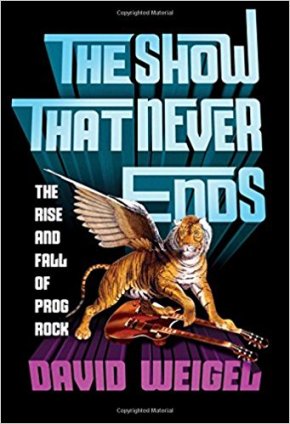 The Show That Never Ends: The Rise and Fall of Prog Rock by David Weigel, WW Norton & Co, 2016
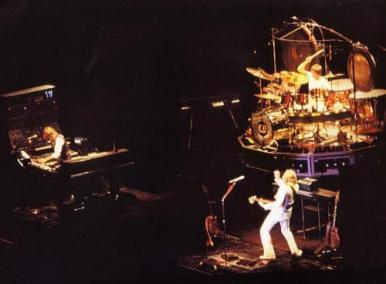 Weigel manages to produce a serious history of Prog without turning it into Das Kapital. He is a big fan but he also understands that there is something innately funny about the genre. Pomposity was one of its hallmarks in the manner that nihilistic aggression was part of punk. That is to say, it was pompous but unapologetically so. Naturally, Prog became something of a punchline. This was, after all a genre where one band (Magma) made up its own language (Kobaian). Rock critics hated it. They took the first few albums on their own merits – Lester Bangs liked Yes’s first album, for example – but shot each subsequent release down like wooden ducks on the midway. Remember that these writers, for the most part, found Led Zeppelin pretentious. Imagine what they thought when Rick Wakeman’s The Six Wives of Henry VIII turned up for review. When Emerson Lake and Palmer released Trilogy in 1972, Robert Christgau wrote: “The pomposities of Tarkus and the monstrosities of the Mussorgsky homage clinch it–these guys are as stupid as their most pretentious fans. Really, anybody who buys a record that divides a composition called “The Endless Enigma” into two discrete parts deserves it.” Still, for a little while, Prog went over like horses with the record buying and concert attending public. The most popular band of today wouldn’t dare to dream of selling a tenth of what a lesser Kansas record would have in the 70s.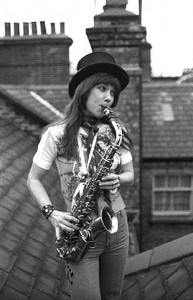
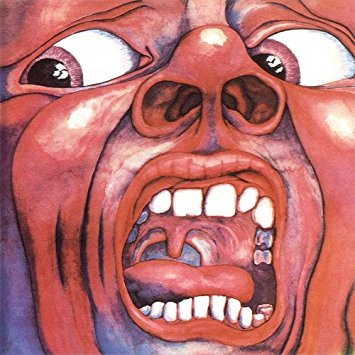 The next big challenge is finding a starting point. Weigel begins with The Moody Blues, Procol Harum, The Nice, and Pink Floyd. He mentions The Beatles’ Sgt Pepper which I think may have given permission for some of the high concept psychedelia that followed. The Who’s Tommy, The Small Faces’ Odgen’s Nut Gone Flake, and The Zombies’ Odessey and Oracle come to mind. I was surprised that The Pretty Things’ SF Sorrow didn’t rate a mention. Weigel more or less settles on The Moody Blues’ Days of Future Passed and King Crimson’s In the Court of the Crimson King as the point of lift off. Naturally, some of the other bands had false starts. The first Genesis album is a lot closer to Cucumber Castle than most Prog fans would care to admit. Just over two years later, they recorded Supper’s Ready, a 23 minute masterpiece or nightmare, depending on your perspective. Either way, it is Prog’s answer to The Wasteland. How’s that for a big call?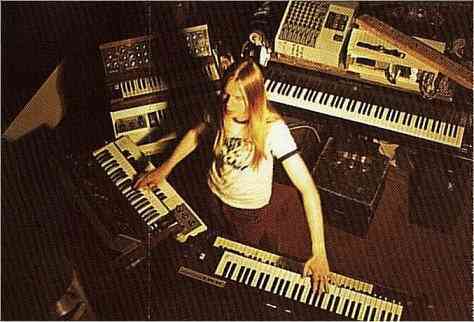
 I must admit that, Pink Floyd and Jethro Tull aside, I have never been a great fan of this stuff. While reading the book, however, I discovered some wonderful King Crimson albums I’d never heard and finally picked up Robert Wyatt’s Rock Bottom. I even spun Emerson Lake and Palmer’s first record one night. Lucky Man brought back good memories of summer camp in the 1970s. I was struck by a sense that this music was more a part of my childhood than I thought. However, Gabriel-era Genesis remains too freaky for me. I have a complicated and slightly scary story about why I don’t listen to them but I’ll save that for when Peter Gabriel writes a memoir.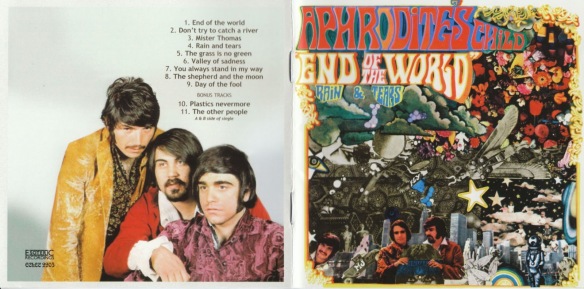
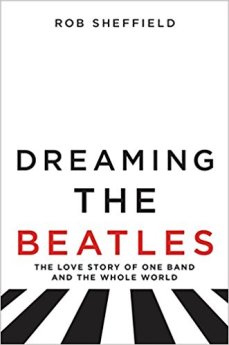 Dreaming The Beatles by Rob Sheffield, Harper Collins, 2017

 One of the threads holding the book together is a series of reflections on the relationship between John and Paul. The chapter with the best title, Paul Is A Concept By Which We Measure Our Pain, is a heartfelt essay on the John/Paul dynamic and its wider implications. “Every drama queen John needs a Paul to sweep up after him. It’s tough for two Johns to be friends, which is why Johns find themselves entangled with Pauls who disappoint them.” Wow. The Beatles as a model for Transactional Analysis. Sheffield says, movingly: “For John, Paul was the boy who came to stay; for Paul, John was the sad song he couldn’t make better.” They couldn’t escape each other. In 1975, John said, “If I took up ballet dancing, my ballet dancing would be compared with Paul’s bowling.” The obvious Fred Flintstone reference aside, he was spot on and Paul’s bowling is still being compared to John’s dancing.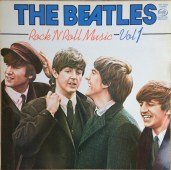

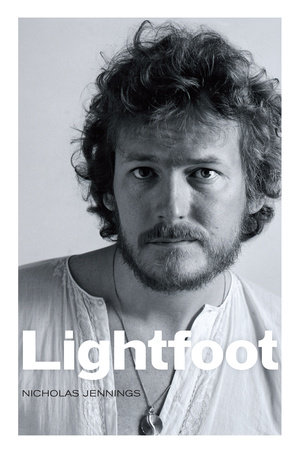 When I was 17, my dad introduced me to his new girlfriend, a woman called Anne. She was in her 40s and was in the habit of punctuating everything she said with one of those smoker’s laughs that sound like a cough. When my dad went into another room to take a phone call, she asked if it was true that I liked music. I said it was. She told me that ‘Gordy’ Lightfoot had written a song about her. Really, I said, which one? Sundown, she told me. Isn’t that about a prostitute? I asked. When my dad returned, Anne said, ‘I think your son just called me a hooker.’ It was awkward.
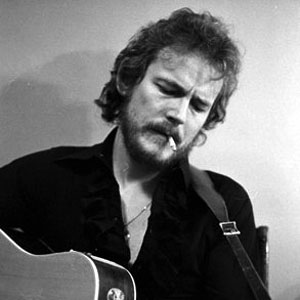 Where I come from, Gordon Lightfoot is bigger than…well, just about anyone. Put it this way, a lot of Canadians who wouldn’t know a Neil Young song if one backed over them could probably easily name 10 Lightfoot songs. I remember my grandfather throwing Gord’s Gold into the 8 track player and letting it play over and over all day. I can also remember the Canadian bands I loved in the 1980s name checking him in interviews and playing his songs in encores. He played Massey Hall every year to audiences that included Bay Street lawyers, Scarborough tow truck drivers, hippies, punks, Social Studies teachers, and glad handing politicians. He could have run for Parliament, he could have been crowned king.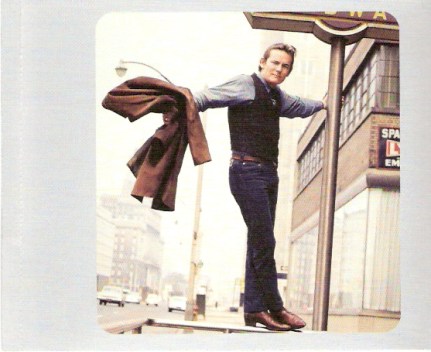
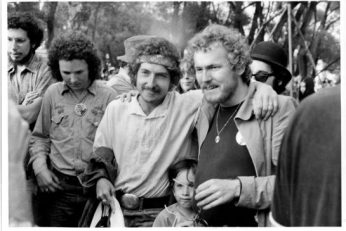 Jennings explores Lightfoot’s relationship with Bob Dylan in some detail. Dylan is a fan, no question. There is a small group of songwriters that Dylan admires. He is generous but fickle on this topic in interviews. Sometimes he mentions John Prine, sometimes it’s Jimmy Buffett (no, really, he said that once) but the name that consistently comes up is Gordon Lightfoot.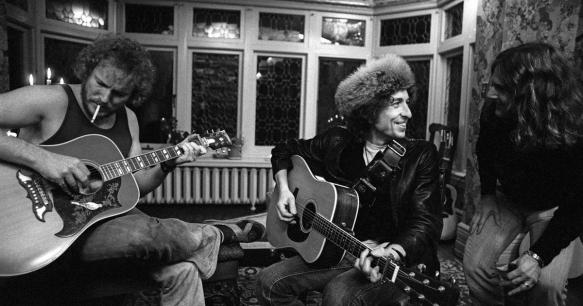
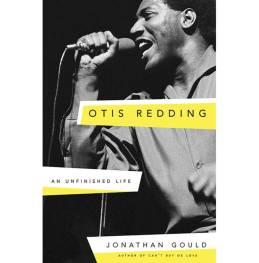 Otis Redding: An Unfinished Life by Jonathan Gould, Crown 2017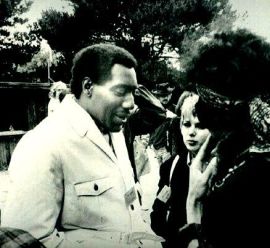
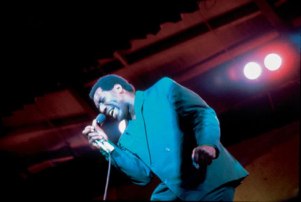 Gould weaves Redding’s story into the broader narrative of African American life in the mid 20th century. His generation of singers, including his occasional rival James Brown, followed the examples of Ray Charles and Sam Cooke who had both worked hard to maintain control over their careers. The young Otis had to prove himself several times in new neighborhoods when the family moved for work in the 1950s. The man that emerges in this book is no pushover and this is not the story of how a black entertainer was ripped off by unscrupulous white men. From the beginning, Otis chose the people around him carefully and, for the most part, avoided the usual pitfalls musicians encounter when their music begins to make money.
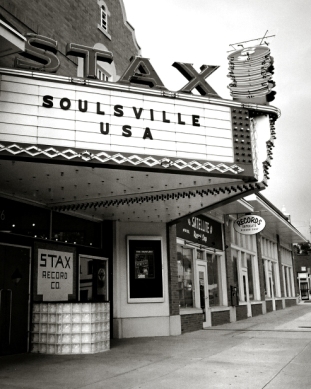 If you’ve already read the standard Stax Records books (see my list below), most of which cover Otis at great length, there are still many good reasons to read A Life Unfinished. The research is impeccable and perhaps it is time for a serious biography that goes beyond the music and addresses the wider implications of Otis Redding’s time on earth. Gould works hard to penetrate the somewhat mysterious inner life of the man. This is by no means some kind of iconoclastic Albert Goldman style biography but we are certainly left with a sense that there was a lot more to Otis than the genial image projected by his music.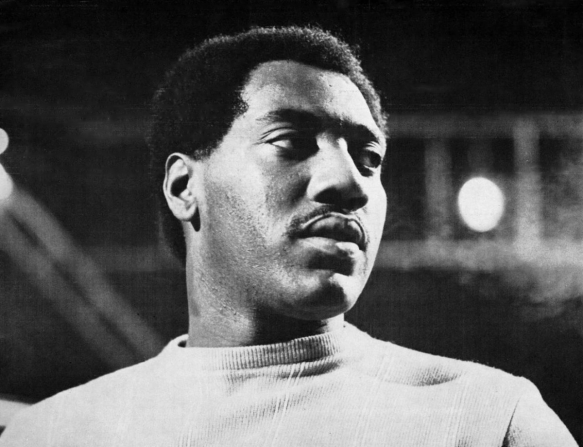
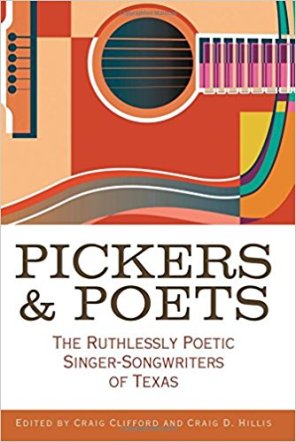 Pickers and Poets: The Ruthlessly Poetic Singer-Songwriters of Texas by
  I was sold when Willis Alan Ramsay turned up in one of the first essays. In the chapters that follow, it becomes clear that many songwriters continue to hold him in very high esteem. He recorded exactly one album in 1972. It sold poorly and disappeared almost immediately. But what a record! You’ll recognise one song on it. Yes, Willis Alan Ramsay wrote Muskrat Love and, what’s more, it’s a great song. His version, that is. He also wrote Angel Eyes, a song that you will either play or wish you had played at your wedding.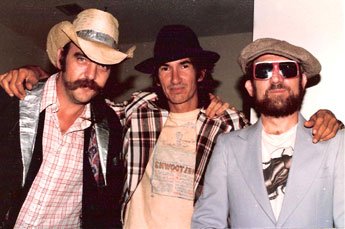
 The introduction includes a cringe-worthy explanation of why so few women are included but the chapter devoted exclusively to them is perhaps the best in the book. There are also chapters on newish singer songwriters like Kacey Musgraves and Terri Hendrix in the last section of the book. The whole thing, at times, seems edited by committee so perhaps they forgot. The chapter on Don Henley (yes, from Texas, shame about his anaemic music) was mercifully brief but still too long for this reader. The sections on figures like Steve Earle and Lucinda Williams contained far too much general information that is already widely available. The chapter on Rodney Crowell, on the other hand, was fascinating. Guy Clark seemed underplayed throughout the book though the essay by Tamara Saviano bodes well for her recent biography of the man. But these are just quibbles about an engaging and informative book. Any book on music that I have to put down so that I can listen to an artist or album that I don’t know gets high marks from me. It took me weeks to get through this one! Discovering David Rodriguez alone was worth the cover price.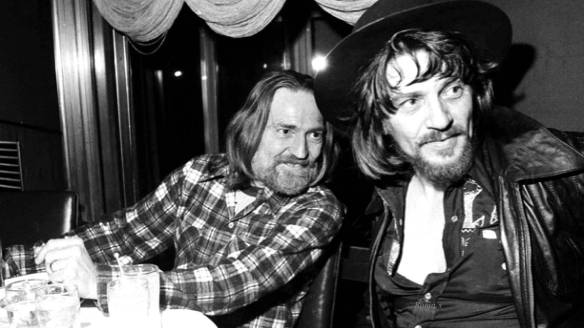
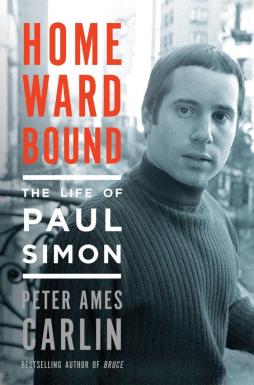 Homeward Bound: The Life of Paul Simon by Peter Ames Carlin, Henry Holt, 2016
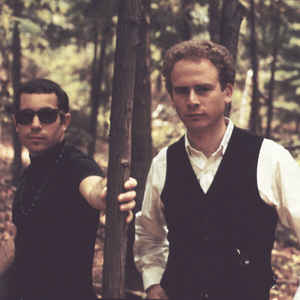 It didn’t last long. Around 1970, Art’s involvement in the Catch 22 film proved too much for Simon’s fragile ego. He went solo, sank into depression when his first album only sold 2 million copies, and finally phoned up Artie to appear with him on the second ever episode of Saturday Night Live. “So, you came crawling back?” he said. The reunion lasted for one glorious song, My Little Town.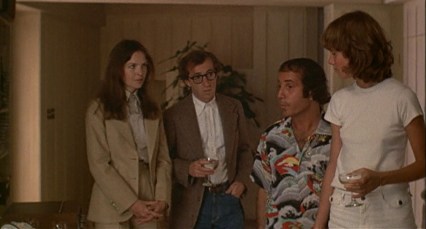
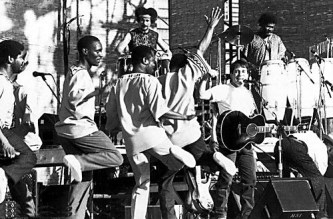 And that brings us to Graceland. This is where the book really takes flight. What a story! Graceland was an album that I loathed with an almost exquisite fervour when it appeared in 1986. It sounded like BMW coke music, the kind of thing Gordon Gecko would have in his car. Man, the 80s were awful. Don’t let anyone tell you differently, kids. Simon predictably ran into trouble when he went to South Africa and recorded with a group of mbaqanga musicians that he first heard on a cassette that he forgot to give back to Heidi Berg. Before he even got around to his usual shenanigans with writing credits, he was in trouble with the ANC and found himself on a UN blacklist of musicians who had broken the embargo against working in South Africa.

 On Books On Music